
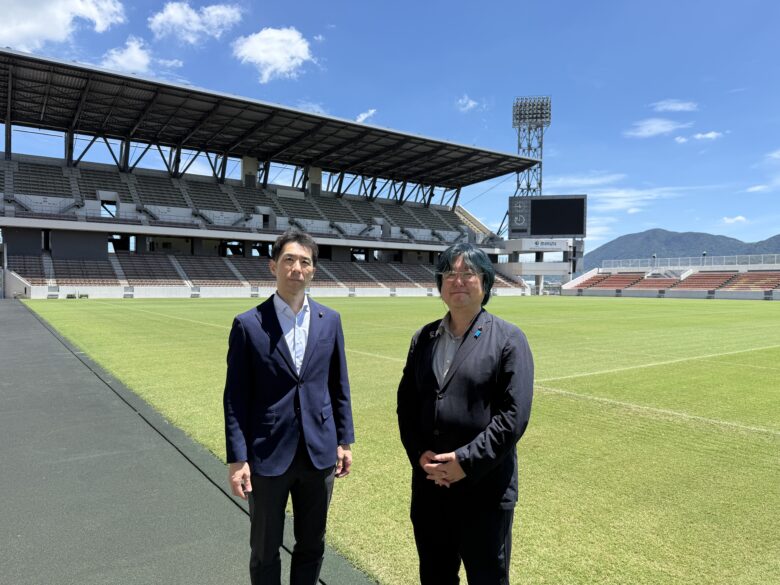
秋田市議会議員会派「そうせいと維新」で、7月26日から30日まで行政視察を行いました。今回はその3日目。訪れたのは、福岡県北九州市にある「ミクニワールドスタジアム北九州」です。
スポーツ観戦が好きな方なら、「スタジアム」と聞くと、まず試合の日のにぎわいを思い浮かべるのではないでしょうか。でも、もし年間365日のうち、試合がない日のほうが圧倒的に多いとしたら――「その施設を、どう使うのか?」
これは、スポーツ施設を整備するときに避けて通れない大きなテーマです。今回の視察では、単に「立派なスタジアムですね」という話ではなく、施設をどう地域の財産にしていくのかという視点で、北九州市の取組を見てきました。
スタジアムは、試合の日だけのものじゃない
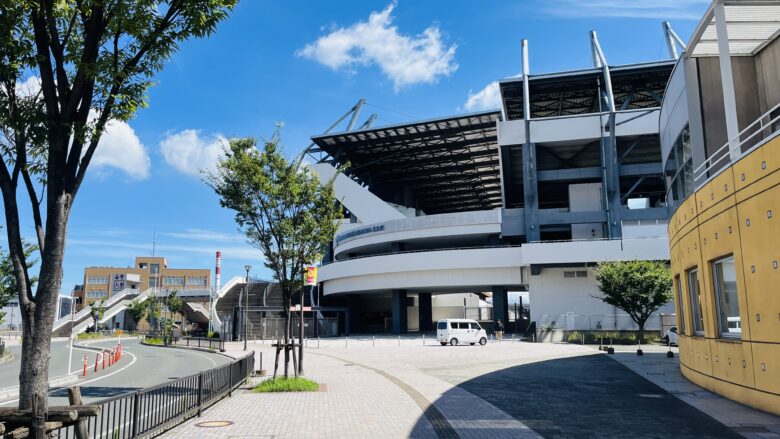
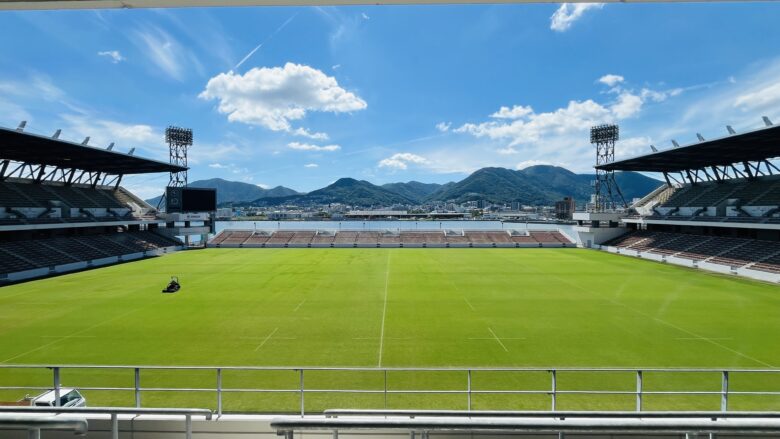
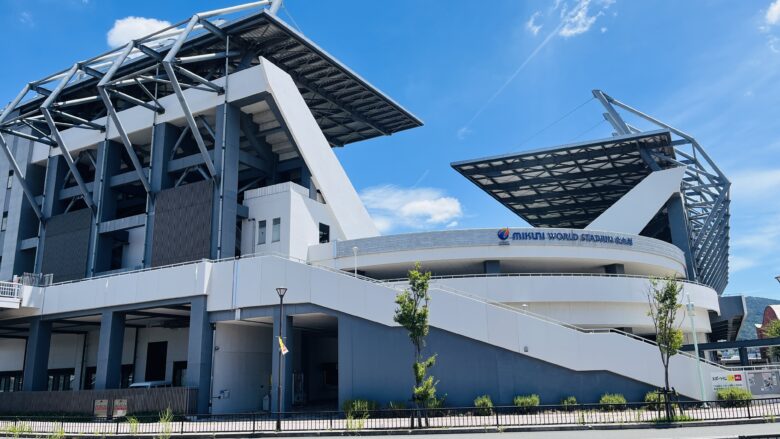
ミクニワールドスタジアム北九州は、Jリーグ・ギラヴァンツ北九州のホームスタジアムです。平成29年に完成し、約1万5,000人を収容。小倉駅から徒歩約7分という抜群のアクセスに加え、海に面し、関門海峡を望むというロケーションも魅力です。整備にはPFI方式が採用され、設計・建設費は約99億円。さらに15年間の管理運営費として約15億円が見込まれています。
ここで、私が興味を持ったのが「年間何日使われているのか」という点です。施設では「フィールド100日利用計画」を掲げ、プロサッカーだけでなく、ラグビーの国際試合や高校生の大会、さらに市民向けの芝生遊び、健康体操、マルシェなど、さまざまな企画を実施しています。令和7年度には、実際に154日の利用実績がありました。つまり、スタジアムを「試合を見るための箱」で終わらせない。試合のない日にも人が集まる仕掛けをつくることで、施設そのものの価値を高めていました。
99億円の施設、どうやって元を取る?
視察で特に印象に残ったのが、施設単体の「黒字・赤字」だけでは評価しないという考え方です。年間の指定管理料は約1億円。一方、令和7年度の使用料収入は約1,800万円でした。数字だけを見ると、「それで大丈夫なの?」と思うかもしれません。しかし、施設側が重視しているのは、スタジアムそのものがどれだけ儲かるかではありません。
スタジアムに人が来る。
↓
駅前に人が集まる。
↓
飲食店や商店などを利用する。
↓
地域全体にお金が落ちる。
こうした「波及効果」を重視しています。実際、整備前後の人流を調査したところ、約11.7億円の経済効果が確認され、駅前の人流も約30%増加したとのことでした。これは、公共施設の価値を考えるうえで非常に重要な視点だと感じます。「施設の収支」だけを見るのか。それとも「地域全体にどんな効果を生んだか」まで見るのか。同じ施設でも、評価の物差しを変えると見えてくるものが大きく違います。
芝生一枚にも、運営の苦労がある
もちろん、華やかなスタジアムの裏側には、細かな維持管理があります。例えば芝生。サッカーとラグビーでは芝への負担が異なるため、1日の使用時間にも制限があります。サッカーは最大210分、ラグビーは最大90分。さらに、夏芝と冬芝を使い分け、日陰になって弱くなった芝については、施設内のナーサリーで育てた芝を使って補修しています。ゴールキーパー付近は年間1回程度張り替えるそうです。
「スタジアムを多目的に使おう」と言うのは簡単ですが、実際には芝生一枚にも専門的な管理とコストが必要です。また、海に近いこともメリットばかりではありません。塩害への対策として塗装の塗り直しが必要になったり、機械類を防錆仕様にしたりする必要があります。施設を造るということは、完成した瞬間がゴールではありません。むしろ、そこから何十年も続く維持管理との付き合いが始まります。
市民と一緒に、使い方を考える
もう一つ興味深かったのが、市民の声を施設運営に取り入れる仕組みです。毎月1回、「満月ミーティング」を開催し、市民からイベントなどについて意見を聞いています。さらに「ミクスタゼミ」として、テントサウナなど、スタジアムからは少し意外に思える企画にも取り組んでいます。こうした取組を見ると、「公共施設だから行政が全部決める」という発想ではなく、「市民と一緒に使い方をつくっていく」という考え方が伝わってきます。
秋田市でも、公共施設を整備するときに「何を造るか」だけではなく、「市民がどう使いたくなるか」を最初から考えることが大切です。今回の視察で考えさせられたのは、まさにそこでした。スポーツ施設は、スポーツのためだけにある必要はありません。スポーツ観戦、健康づくり、子どもの活動、イベント、観光、地域交流、そして経済活動。一つの施設に、いくつもの「人が訪れる理由」をつくることができれば、その施設は単なる建物ではなく、まちの拠点になります。秋田市においても、人口減少や中心市街地の活性化、公共施設の維持管理など、考えなければならない課題はたくさんあります。だからこそ、「いくらかかるか」だけではなく、「その投資によって地域に何が生まれるのか」という視点を持つことが重要です。
今回の視察で得たヒントを、秋田市のこれからのまちづくりにしっかり生かしていきたいと思います。皆さんも、次にスポーツ施設を訪れたときは、ぜひ「この施設は、試合がない日に何をしているんだろう?」という視点で眺めてみてください。まちづくりは、立派な建物を造ることから始まるのではありません。「そこに人が行きたくなる理由」をどうつくるか。これからも現場に足を運び、秋田市の未来につながるヒントを一つずつ探していきます。
【English】260728 — Akita City Council Group “Sosei to Ishin” Administrative Inspection (Day 3): What Makes a Stadium a Community Asset?
As a member of the Akita City Council group “Sosei to Ishin,” I took part in an administrative inspection tour from July 26 to 30. On the third day, we visited Mikuni World Stadium Kitakyushu in Kitakyushu, Fukuoka Prefecture.
When you hear the word “stadium,” you may think of the excitement on game days. But there are far more days without games than with them. So the important question is: How can we make good use of the stadium on those days? This was one of the main questions I considered during the visit.
“A stadium is not only for game days.” Mikuni World Stadium Kitakyushu is the home stadium of J.League club Giravanz Kitakyushu. It was completed in 2017 and can hold about 15,000 people. It is only about a seven-minute walk from Kokura Station and faces the sea, with a beautiful view of the Kanmon Strait. The project used the PFI model, with about ¥9.9 billion spent on design and construction, plus about ¥1.5 billion in management and operating costs over 15 years. What interested me most was how often the stadium is actually used. Under its “100 Days of Field Use” plan, the stadium hosts not only soccer but also international rugby matches, high school competitions, community activities, health exercises and markets. In fiscal 2025, it was used on 154 days. In other words, the goal is not to make it simply a place for watching games, but a place where people want to visit throughout the year.
“How do we make a ¥9.9 billion facility worth the investment?” One important lesson was that the stadium should not be judged only by whether it makes a profit by itself. The annual management fee is about ¥100 million, while income from facility use was about ¥18 million in fiscal 2025. Looking only at these figures might raise concerns. However, the real value is the wider economic impact: people come to the stadium → more people gather around the station → they use nearby restaurants and shops → money flows into the local economy. A study found an economic impact of about ¥1.17 billion, while the number of people around the station increased by about 30%. This made me think about how we evaluate public facilities. Should we look only at the facility’s own income and expenses, or also at the benefits it creates for the whole community?
“Even the grass requires careful management.” A stadium that is used for many purposes also needs professional maintenance. Soccer and rugby place different demands on the grass, so there are limits on playing time. Summer and winter grass are also used at different times, and damaged areas are repaired with grass grown in the stadium’s own nursery. Being close to the sea also creates challenges, such as damage from salt. Buildings and equipment need regular maintenance and protection against rust. Building a facility is not the end of the story. It is the beginning of decades of maintenance and operating costs.
“Let’s decide how to use it together with citizens.” I was also interested in how citizens are involved in the stadium’s management. Once a month, the “Full Moon Meeting” is held to hear ideas from citizens about events and activities. The stadium also holds programs such as “Mikusta Seminar,” including activities that may seem unusual for a stadium, such as tent saunas. These efforts show a different approach: rather than having the government decide everything, the community and the government can think together about how to use a public facility.
For Akita City, I believe we should think not only about what to build, but also about how citizens will want to use it. A sports facility does not have to be used only for sports. It can bring together sports, health activities, children’s programs, events, tourism, community interaction and local business. If we can create many reasons for people to visit, a facility can become more than a building—it can become a hub for the community.
Akita City faces many challenges, including population decline, revitalizing the city center and maintaining public facilities. That is why we need to ask not only, “How much will it cost?”, but also, “What will this investment create for the community?” I want to use what I learned from this visit in Akita City’s future development. The next time you visit a sports facility, I encourage you to look at it from a different angle: “What does this place do on days when there is no game?” Community development does not begin simply by building impressive facilities. It begins by creating reasons for people to want to go there. I will continue visiting places around Japan and looking for ideas that can help build Akita City’s future.
【Español】260728 — Visita de estudio de la agrupación “Sosei to Ishin” del Concejo Municipal de Akita (Día 3): ¿Cómo puede un estadio convertirse en un activo para la comunidad?
Como miembro de la agrupación “Sosei to Ishin” del Concejo Municipal de Akita, participé en una visita de estudio administrativo del 26 al 30 de julio. El tercer día visitamos el Estadio Mikuni World Stadium Kitakyushu, en la ciudad de Kitakyushu, prefectura de Fukuoka.
Cuando pensamos en un estadio, normalmente imaginamos la emoción de los días de partido. Pero durante el año hay muchos más días sin partidos. Por eso, la pregunta importante es: ¿cómo podemos aprovechar el estadio también esos días? Esa fue una de las principales preguntas que me llevé de esta visita.
“Un estadio no es solo para los días de partido.” El Mikuni World Stadium Kitakyushu es la sede del equipo de la J.League Giravanz Kitakyushu. Fue construido en 2017 y tiene capacidad para unas 15.000 personas. Está a unos siete minutos caminando de la estación de Kokura y tiene una ubicación privilegiada frente al mar, con vista al estrecho de Kanmon. Su construcción se realizó mediante el modelo PFI, con una inversión de unos ¥9.900 millones, además de unos ¥1.500 millones para su administración y operación durante 15 años. Lo que más me llamó la atención fue la cantidad de días que realmente se utiliza. Con su plan de “100 días de uso del campo”, allí se realizan partidos de fútbol y rugby, competencias escolares, actividades para la ciudadanía, ejercicios de salud y mercados. En el año fiscal 2025 fue utilizado durante 154 días. Es decir, la idea no es que sea solamente un lugar para ver partidos, sino un espacio al que las personas quieran ir durante todo el año.
“¿Cómo hacemos que una inversión de ¥9.900 millones genere valor?” Una de las lecciones más importantes fue que el estadio no debe evaluarse solamente por si genera ganancias por sí mismo. El pago anual por su administración es de unos ¥100 millones, mientras que los ingresos por uso fueron de unos ¥18 millones en 2025. Si solo vemos esos números, podríamos preocuparnos. Pero el valor también está en el efecto que genera en toda la zona: la gente va al estadio → aumenta el movimiento alrededor de la estación → las personas utilizan restaurantes y comercios → el dinero circula en la comunidad. Según un estudio, el impacto económico fue de unos ¥1.170 millones y el movimiento de personas alrededor de la estación aumentó aproximadamente un 30 %. Esto me hizo pensar en cómo debemos evaluar las instalaciones públicas. ¿Debemos mirar solamente sus ingresos y gastos, o también los beneficios que generan para toda la comunidad?
“Hasta el césped necesita un cuidado especializado.” Un estadio que se utiliza para diferentes actividades necesita una administración cuidadosa. El fútbol y el rugby afectan de manera diferente el césped, por lo que existen límites en el tiempo de uso. También se utilizan diferentes tipos de césped según la temporada y se reparan las zonas dañadas con césped cultivado en el propio estadio. Además, estar cerca del mar tiene sus dificultades, como los daños causados por la sal. Los edificios y equipos necesitan mantenimiento y protección contra la corrosión. Construir una instalación no es el final del proyecto. Es el comienzo de décadas de mantenimiento y costos de operación.
“Pensar juntos con la ciudadanía cómo utilizar el espacio.” También me pareció interesante la participación de los ciudadanos en la administración del estadio. Una vez al mes se realiza la “Reunión de Luna Llena”, donde se escuchan ideas de la ciudadanía sobre eventos y actividades. También se organizan actividades del “Seminario Mikusta”, incluso algunas poco habituales para un estadio, como los saunas en tiendas de campaña. Esto demuestra una forma diferente de gestionar los espacios públicos: no se trata de que la administración decida todo, sino de pensar junto con la ciudadanía cómo aprovecharlos mejor.
En Akita, considero importante pensar no solamente “qué vamos a construir”, sino también “cómo querrán utilizarlo las personas”. Una instalación deportiva no tiene que servir únicamente para practicar o ver deportes. Puede reunir actividades deportivas y de salud, programas para niños, eventos, turismo, intercambio comunitario y actividad económica. Si logramos crear muchas razones para que las personas quieran visitarla, una instalación puede convertirse en mucho más que un edificio: puede ser un verdadero centro de la comunidad.
Akita enfrenta desafíos como la disminución de la población, la revitalización del centro de la ciudad y el mantenimiento de las instalaciones públicas. Por eso, no debemos preguntar solamente “¿cuánto costará?”, sino también “¿qué beneficios traerá esta inversión a la comunidad?” Quiero aprovechar lo aprendido en esta visita para el futuro desarrollo de Akita. La próxima vez que visite una instalación deportiva, le invito a verla desde otra perspectiva: “¿Qué hace este lugar los días en que no hay partidos?” El desarrollo de una ciudad no comienza simplemente construyendo edificios impresionantes. Comienza creando razones para que las personas quieran ir allí. Seguiré visitando diferentes lugares y buscando ideas que puedan ayudar a construir el futuro de Akita.