
「竿燈まつりは見たことがある。」秋田市ではそういう方は多いと思います。でも、「神社の境内で行われる竿燈」を見たことがある方は、意外と少ないのではないでしょうか。
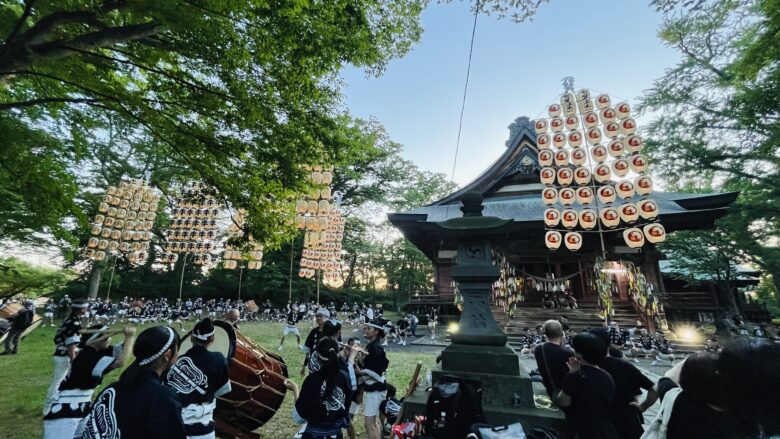
先日、第12回日吉八幡(ひえはちまん)神社七夕祭に参加し、18時から神事斎行(神社拝殿)に参列した後、境内で披露された竿燈演技を見学しました。毎年楽しみにしている行事ですが、今年も改めて「地域に根付く伝統」の素晴らしさを感じる時間となりました。
神社だからこそ伝わる「本来の竿燈」
昨年、この七夕祭に大学生の娘を誘って来てもらいました。すると、「こんな竿燈は初めて見た」と、とても感動してくれました。その感動を友人に伝えたかったのでしょう。今年は県外出身の大学の友人二人を誘って、再びこの場所を訪れてくれました。
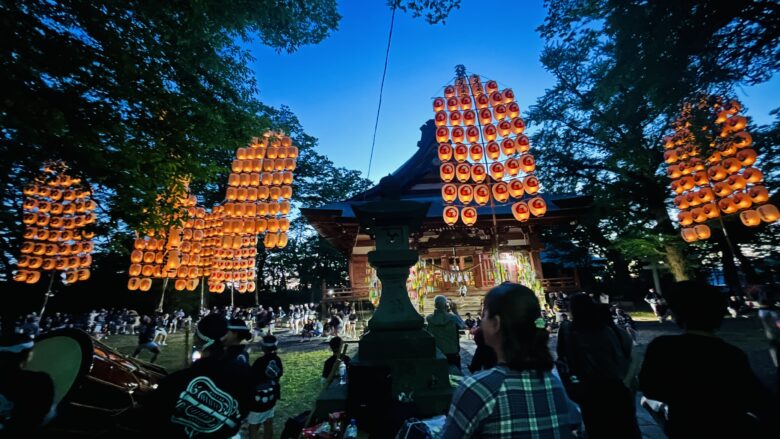
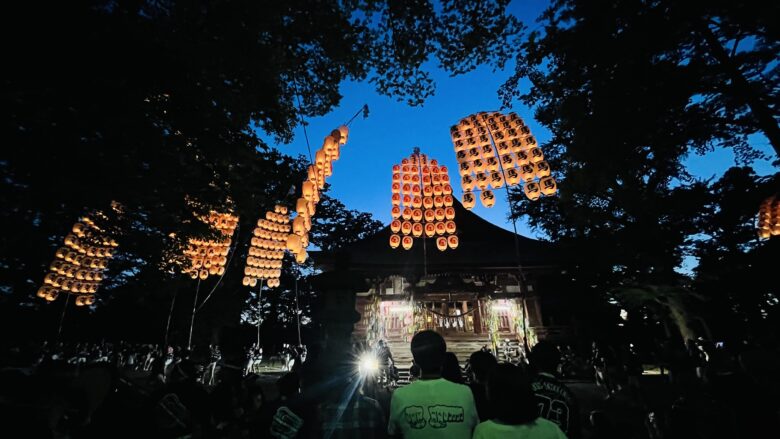
竿燈大通りで行われる本番は、多くの観光客が訪れる秋田を代表するお祭りです。もちろん、その迫力や華やかさは全国に誇れるものです。一方で、日吉八幡神社の境内で行われる竿燈には、また違った魅力があります。演技者や太鼓や笛のお囃子演奏者との距離が近く、竹がしなる音や提灯が揺れる様子、担ぎ手や囃子方の息遣いまで感じられるほどの臨場感があります。まるで観客も、その場の一員になったような感覚になります。また緑あふれる自然の中で夕暮れに灯される竿燈の灯りは、見る人を200年以上前に始まった頃のイメージの中に連れて行ってくれます。
見せるためだけではない、受け継ぐための演技
地元の神社の境内での演技を見ていると、あることに気付きます。それは、「お客さんに見せるため」だけの演技ではないということです。むしろ、これまで竿燈を受け継いできた先輩方へ、「今年もきちんと伝統を守っています」という思いを届けるような、独特の緊張感があります。その一方で、周りには失敗を責める空気はありません。地域の皆さんが温かく見守り、「頑張れ」と心の中で応援しているような雰囲気があります。
伝統文化は、技術だけでは続きません。「次の世代へ渡したい」という思いと、それを受け止める人たちがいて初めて受け継がれていきます。その姿を目の当たりにすると、竿燈は単なる祭りではなく、人と人をつなぐ文化なのだと感じます。
限られた空間だからこそ磨かれる技
日吉八幡神社の境内は、決して広い場所ではありません。だからこそ演技には高い技術が求められます。少しの風やバランスの違いも敏感に感じ取りながら、木々の生い茂る境内という限られた空間で竿燈を自在に操る姿は見応えがあります。大通りでの豪快さとはまた違う、「技を磨き上げた職人芸」のような魅力があります。
地域のお祭りだから規模が小さいのではなく、地域のお祭りだからこそ見られる価値がある。そんなことを改めて実感しました。
地域の誇りは、身近な場所にある
秋田には世界に誇れる文化があります。しかし、その魅力は観光パンフレットだけでは伝わりません。地域の人が守り、育て、受け継いできた場所に足を運んで初めて感じられるものがあります。日吉八幡神社七夕祭は、まさにそんな時間でした。神事から始まり、境内に響くお囃子、真剣な表情で竿燈を操る若衆、そしてそれを見守る地域の皆さん。どれも「地域が育ててきた文化」そのものです。皆さんも来年の七夕祭では、ぜひ日吉八幡神社の境内へ足を運んでみてください。
秋田に住んでいても、まだ知らない竿燈の魅力にきっと出会えるはずです。地域の伝統は、受け継ぐ人だけでなく、見守る人がいてこそ未来へつながります。ぜひ一緒に、秋田の宝を次の世代へつないでいきましょう。
【English】July 4, 2026 – “I Never Knew Kanto Was This Amazing” — Discovering a Local Treasure at the Tanabata Festival of Hie Hachiman Shrine
“I’ve seen the Kanto Festival before.” Many people in Akita City would probably say that. But I think fewer people have ever seen a Kanto performance inside the grounds of a shrine.
The other day, I attended the 12th Tanabata Festival at Hie Hachiman Shrine. After taking part in the Shinto ceremony held at 6:00 p.m. in the shrine’s worship hall, I watched the Kanto performance in the shrine grounds. It is an event I look forward to every year, and once again it reminded me of the beauty of traditions that are deeply rooted in the local community.
■ The Original Spirit of Kanto That You Can Feel Only at a Shrine
Last year, I invited my university-age daughter to this festival. She told me, “I’ve never seen Kanto like this before,” and she was deeply impressed. She wanted to share the experience with her friends, so this year she invited two university friends from outside Akita to come with her.
The main Kanto Festival on Kanto Odori is one of Akita’s most famous festivals and attracts many visitors from all over Japan. Its size and excitement are truly impressive.
However, the Kanto performance at Hie Hachiman Shrine has a different kind of charm. The audience is much closer to the performers and to the musicians playing the drums and flutes. You can hear the sound of the bamboo poles bending, watch the lanterns gently sway, and even sense the performers’ breathing. It feels as if you are part of the performance instead of simply watching it.
Surrounded by green trees, the shrine becomes even more beautiful at sunset. The warm light of the lanterns makes it easy to imagine what Kanto might have looked like when the tradition first began more than 200 years ago.
■ A Performance That Is Meant to Pass on Tradition
While watching the performance at the local shrine, I noticed something special.
The performers are not performing only for the audience. It feels as though they are also showing respect to the generations before them by saying, “We are continuing to protect this tradition.”
At the same time, no one blames the performers if they make a mistake. The local people warmly watch over them and quietly cheer them on.
Traditional culture is not preserved by skill alone. It continues because one generation wants to pass it on, and the next generation is willing to receive it. Watching this made me realize that Kanto is much more than just a festival. It is a culture that connects people.
■ Great Skill in a Small Space
The grounds of Hie Hachiman Shrine are not very large. That is exactly why performing Kanto there requires a high level of skill.
The performers must carefully control the long bamboo poles while paying attention to even the smallest changes in the wind and balance. Watching them perform among the trees is truly impressive.
It is different from the bold and powerful performances on the main street. Here, you can appreciate refined techniques that have been polished over many years, almost like watching skilled craftsmen at work.
This reminded me that a local festival is not valuable because it is large. It is valuable because it offers an experience that can only be enjoyed in the local community.
■ Our Greatest Treasures Are Close to Home
Akita has cultural traditions that we can proudly share with the world. But their true value cannot be understood simply by reading a travel brochure. You need to visit the places where local people have protected, nurtured, and passed down these traditions.
That is exactly what I felt at the Tanabata Festival of Hie Hachiman Shrine.
The Shinto ceremony, the traditional music echoing through the shrine grounds, the young performers skillfully balancing the Kanto poles, and the local people warmly watching over them—all of these together represent the culture that the community has carefully preserved.
If you have the chance next year, I hope you will visit the Tanabata Festival at Hie Hachiman Shrine.
Even if you already live in Akita, I believe you will discover a new side of the Kanto tradition. Local traditions continue into the future not only because people perform them, but also because others come to watch, support, and appreciate them.
Let us all work together to pass this wonderful treasure of Akita on to the next generation.
【Español】4 de julio de 2026 – “Nunca imaginé que el Kanto fuera tan impresionante” — Descubriendo un tesoro de la comunidad en el Festival de Tanabata del Santuario Hie Hachiman
“Ya he visto el Festival de Kanto.” Muchas personas en la ciudad de Akita probablemente dirían eso. Pero creo que son menos las personas que han visto una presentación de Kanto dentro del recinto de un santuario.
Hace unos días participé en el 12.º Festival de Tanabata del Santuario Hie Hachiman. Después de asistir a la ceremonia sintoísta celebrada a las 6:00 p. m. en el salón principal del santuario, disfruté de la presentación de Kanto en el recinto. Es un evento que espero con ilusión todos los años y, una vez más, me hizo sentir la belleza de una tradición profundamente arraigada en la comunidad.
■ El verdadero espíritu del Kanto que solo se puede sentir en un santuario
El año pasado invité a mi hija, que estudia en la universidad, a este festival. Al terminar me dijo: “Nunca había visto un Kanto así”, y quedó realmente impresionada. Quiso compartir esa experiencia con sus amistades y este año invitó a dos compañeras de la universidad, originarias de otras prefecturas, para que también lo conocieran.
El Festival de Kanto que se celebra en la avenida principal es uno de los festivales más representativos de Akita y recibe visitantes de todo Japón. Su tamaño y su espectacularidad son realmente impresionantes.
Sin embargo, la presentación de Kanto en el Santuario Hie Hachiman tiene un encanto muy diferente. El público está mucho más cerca de quienes realizan la demostración y de las personas que tocan los tambores y las flautas. Se puede escuchar cómo se doblan las cañas de bambú, ver cómo se balancean los faroles e incluso sentir la respiración de quienes participan. Uno llega a sentirse parte del espectáculo y no solamente un espectador.
Además, el santuario está rodeado de abundante vegetación y, al caer la tarde, la luz de los faroles crea un ambiente muy especial. Es fácil imaginar cómo habría sido esta tradición cuando comenzó hace más de doscientos años.
■ Una presentación para transmitir la tradición a la siguiente generación
Mientras observaba la presentación en el santuario, me di cuenta de algo muy especial.
Quienes participan no actúan solamente para el público. Da la impresión de que también desean mostrar respeto a las generaciones que conservaron esta tradición y decirles: “Seguimos cuidando esta herencia con responsabilidad.”
Al mismo tiempo, nadie critica a quien comete un error. Las personas de la comunidad observan con cariño y animan a los participantes en silencio.
Las tradiciones culturales no se mantienen únicamente gracias a la técnica. Continúan porque una generación quiere transmitirlas y la siguiente está dispuesta a recibirlas. Al verlo, sentí que el Kanto es mucho más que un festival. Es una cultura que une a las personas.
■ Una gran habilidad en un espacio reducido
El recinto del Santuario Hie Hachiman no es muy grande. Precisamente por eso, presentar el Kanto allí requiere una gran destreza.
Quienes participan deben controlar cuidadosamente las largas cañas de bambú mientras prestan atención a los más pequeños cambios del viento y del equilibrio. Verlos actuar entre los árboles resulta realmente impresionante.
Es diferente de la fuerza y la espectacularidad de las presentaciones en la avenida principal. Aquí se aprecia una técnica refinada, desarrollada durante muchos años de práctica, casi como el trabajo de un artesano.
Esto me recordó que un festival local no tiene valor porque sea grande. Tiene valor porque ofrece una experiencia única que solo puede vivirse en la comunidad.
■ Los mayores tesoros están cerca de nosotros
Akita posee tradiciones culturales de las que podemos sentirnos orgullosos ante el mundo. Pero su verdadero valor no puede conocerse solamente leyendo un folleto turístico. Hay que visitar los lugares donde la gente de la comunidad las ha protegido, cuidado y transmitido de generación en generación.
Eso fue exactamente lo que sentí en el Festival de Tanabata del Santuario Hie Hachiman.
La ceremonia sintoísta, la música tradicional resonando en el santuario, los jóvenes manejando con concentración los Kanto y las personas de la comunidad observándolos con afecto representan la cultura que esta comunidad ha conservado durante muchos años.
Si el próximo año tiene la oportunidad, le invito a visitar el Festival de Tanabata del Santuario Hie Hachiman.
Aunque usted viva en Akita, estoy seguro de que descubrirá un nuevo encanto del Kanto. Las tradiciones locales llegan al futuro no solo gracias a quienes las practican, sino también gracias a quienes las observan, las apoyan y las valoran.
Acompañemos juntos este valioso tesoro de Akita para que también llegue a las próximas generaciones.